Best Metal Detectors in Zambia: 2026 Picks for Gold, Coins & Relics
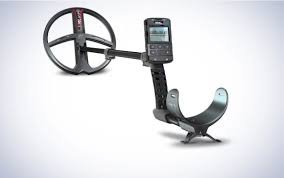
Choosing a detector for Zambia means matching the machine to local ground, local targets and local support. This guide covers what performs here, organised by what you are hunting and what you can spend.
What makes Zambian ground demanding
Zambia's geology is dominated by the Central African Copperbelt and the Katanga sequence, and much of the country's soil carries heavy iron mineralisation as a result. Lateritic red soils are widespread through Central, Southern and Copperbelt Provinces, and these are among the harder ground types for a metal detector to handle.
The practical effect is that a machine which performs well on neutral European or North American soil may lose a significant portion of its depth here. Reviews and depth tests filmed abroad are not a reliable guide to Zambian performance. Ground handling — not headline depth — should drive your decision.
Best for small gold and prospecting
If your target is alluvial gold and small nuggets, sensitivity to sub-gram targets matters more than anything else. High-frequency VLF machines running 40 kHz and above are designed for exactly this, and dedicated gold detectors in this class will pick up flakes that a general-purpose machine passes over entirely.
In heavily mineralised ground, pulse induction becomes the stronger option. PI machines largely ignore soil mineralisation, so they keep their depth where VLF machines fade. The trade-off is weight, higher cost, and effectively no discrimination — you dig everything. For Copperbelt ground and mineralised riverbeds, most experienced prospectors accept that trade.
The Nokta Gold Kruzer and Gold Finder 2000 sit in the high-frequency VLF category, while Minelab's GPX and Gold Monster lines cover the pulse induction and dedicated gold end.
Best for coins, relics and jewellery
For general detecting around old settlements, mission stations, colonial-era sites and public areas, simultaneous multi-frequency machines are the strongest all-round choice. They transmit several frequencies at once, which gives both good depth and reliable target identification, so you can separate iron from non-ferrous before digging.
Look for a machine with a clear target ID display and adjustable iron control. The Minelab Equinox and Manticore, and Nokta's Legend and Score models, are the mainstream options in this category. These are also the most forgiving machines to learn on, because the target ID gives you immediate feedback on what you are hearing.
Best for deep caches and 3D imaging
Deep-seeking and imaging systems are a separate category with a separate purpose. They locate large metallic masses, voids and buried containers at depths conventional detectors cannot reach, and some produce a three-dimensional graphical map of what lies underground.
They are poor at finding small gold — that is not what they are built for. Systems like the Nokta Deephunter 3D Pro, Jeohunter 3D and Invenio Pro, and the GoldXtra TGX line, belong to this class. Treat them as professional capital equipment, and be sceptical of any depth claim that has not been demonstrated to you in person on local ground.
Best for beginners
If you are new to detecting, buy a machine that is simple enough that you actually use it. Complexity discourages practice, and practice is what finds gold.
Look for automatic ground balance, a small number of preset search modes, light weight, and waterproofing to at least the coil. The Nokta Simplex family and Minelab's Vanquish series are both designed around this brief, and either will teach you the fundamentals properly. Plan to move up in eighteen months if you stay with the hobby — the entry machine will still be useful as a backup or a loaner.
Matching machine to region
- Copperbelt Province — heavy mineralisation and abundant metallic trash from mining activity. Pulse induction or strong ground-balancing multi-frequency machines are close to essential here.
- North-Western Province — active alluvial gold interest. High-frequency VLF for fine gold in worked ground; PI where mineralisation is severe.
- Southern Province and riverbeds — waterproof machines matter. Multi-frequency handles wet sand and gravel well.
- Urban and settlement areas — trashy ground with heavy iron contamination. Prioritise fast recovery speed and good target separation over raw depth.
Accessories that are not optional
Budget for these alongside the detector, because detecting without them is slower and less productive.
- A pinpointer — cuts recovery time dramatically and prevents damage to finds. Arguably the highest-value accessory you can buy.
- A proper digging tool — Zambian soil compacts hard in the dry season, and a garden trowel will not survive a season.
- Headphones — faint signals are inaudible through a speaker in wind or traffic noise.
- Spare batteries or a power bank — heat shortens runtime noticeably.
- A finds pouch — so recovered trash goes home with you rather than back in the ground.
Buying locally versus importing
Imported machines often look cheaper on the listing page, and then are not. Import duty, VAT, freight and customs clearance add substantially to the landed cost, and manufacturer warranties are frequently void when the unit was bought from an unauthorised reseller.
The larger issue is service. If a coil fails or a control box develops a fault, an imported machine means international shipping in both directions and weeks of downtime. Buying from a local supplier who stocks spare coils, honours the warranty, and can demonstrate the machine on local ground is generally the better long-term decision even at a higher sticker price.
Legal position
Recreational detecting is legal in Zambia, but prospecting for minerals with intent to extract requires licensing under Zambian mining law, administered by the Ministry of Mines and Minerals Development. Private land requires the owner's permission, and national parks and protected areas are closed to detecting.
Confirm the current position with the Ministry before prospecting commercially — requirements are updated periodically and it is worth checking rather than assuming.
Summary
There is no single best detector for Zambia, only the best detector for your target, your ground and your budget. If you are hunting small gold in mineralised soil, prioritise ground handling and frequency. If you are hunting coins and relics, prioritise multi-frequency and target ID. If you are new, prioritise simplicity and get your hours in. And whatever you buy, buy it somewhere you can get it serviced.
Need help choosing a detector?
We can recommend a model based on your budget, soil type, and target.
Browse DetectorsRelated posts
Gold Detector Buying Guide: How to Choose the Best Model in Zambia
Compare depth, discrimination, ground types, and features to pick the right gold detector for your budget.
How to Use a Gold Detector: Step-by-Step Guide for Beginners
Learn the correct settings, search patterns, and ground balance tips to find gold faster.